
- Local: (516) 346-4636
- Toll-Free: (800) 886-6060
- Email: kflynn@nationalwebbing.com
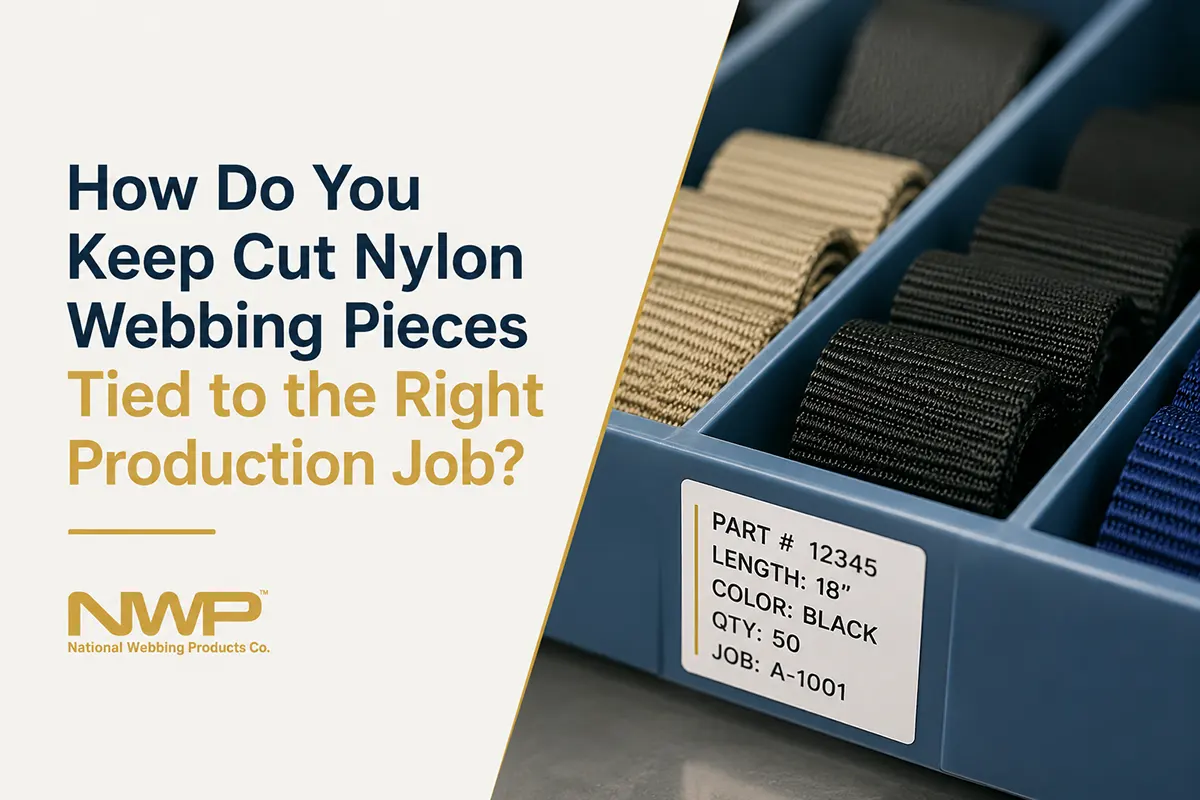
Cut webbing pieces need different handling than roll goods because each piece has already been prepared for a specific length, job, or assembly. Once webbing is cut, it is no longer only bulk material sitting in storage. It becomes a production part that must remain tied to the correct style number, part number, length, color, quantity, and next step.
At National Webbing Products Co., we provide cut pieces for special requirements. That makes cut-piece control important for customers who order repeated lengths from us or cut nylon webbing internally from rolls. If cut pieces are stored like loose leftovers, the production team loses the control that made them useful in the first place.
Roll goods give a production team flexibility because they can cut what they need when they need it. Cut pieces are different because the length decision has already been made. Each piece should now match a specific product, kit, assembly, sewing step, or production count.
Once nylon webbing is cut, the storage question changes. The team is no longer asking only, “What roll is this?” They are asking, “What job does this length belong to, and what happens to it next?”
|
Material format |
Main control issue |
|
Roll goods |
Style, width, color, quantity |
|
Cut pieces |
Length, count, job, assembly |
|
Partial rolls |
Remaining material, original style |
|
Repeated lengths |
Separation by part or SKU |
This distinction matters because cut pieces often look similar after leaving the roll. Two pieces may share the same color and width but belong to different assemblies because their lengths are different. Without clear separation, someone may need to stop and measure, compare, or confirm before production continues.
A cut-piece label should tell the next person exactly what the pieces are and where they belong. The label should not stop at “nylon webbing” or a color description. It should connect the batch to the material identity and the production use.
These details should travel with the pieces as they move through storage, kitting, sewing, and assembly. A label that only works for the person who packed the bin is not enough. The goal is for the next person in the process to understand the batch without relying on memory or asking someone else to identify it.
A clear label also helps purchasing and production connect the finished batch back to the original webbing order. That matters when the same cut length will be reordered later. It also helps when a team needs to compare the current batch against a prior part, drawing, sample, or swatch.
Cut pieces become risky when different lengths, colors, or jobs sit together without clear separation. A small difference in length may not stand out visually once pieces are stacked, bagged, or moved. Similar colors and widths can also create confusion when several product lines use related material.
The solution is not complicated, but it needs to be deliberate. Similar pieces should not depend on memory or quick visual judgment. Separate them before they reach the workstation.
Different lengths should be placed in separate bins, bags, cartons, or clearly labeled containers. If two cut lengths belong to the same job, label each one so the production team understands where each length goes. If a product uses several pieces that look alike, the storage system should make the difference obvious before assembly starts.
The container should support the way production uses the pieces. A bin may work for active assembly material, while a carton may make sense for reserve pieces or a future production run. The right choice depends on how the pieces move through your facility.
What matters most is that the container keeps the batch together and identified. The pieces should not be left loose on a bench, mixed with partial rolls, or placed in a general webbing area without job information. Once pieces are cut, the container becomes part of the control system that keeps them tied to the right use.
|
Container type |
Best use |
|
Labeled bin |
Active production |
|
Bagged batch |
Small quantities |
|
Carton |
Reserve or staged stock |
|
Divided container |
Similar lengths |
|
Job kit |
Assembly-ready parts |
The container should make the next step easier, not hide the material from view. If a team needs to count pieces quickly, the container should support count control. If a team needs to compare lengths, the container should prevent mixed pieces from being stacked together.
Before cut pieces move into sewing, kitting, or assembly, your team should confirm the batch. This check should happen before the material reaches the workstation. Once the wrong length is sewn, packed, or assembled, it's harder to correct cleanly.
The check should focus on the facts that connect the pieces to the job. The team should confirm the material identity, cut length, count, and assembly reference. If a drawing, sample, swatch, or job note is needed, keep it near the handoff so the team does not need to search for it mid-process.
This check protects the value of ordering or preparing cut pieces in the first place. Cut pieces are supposed to reduce uncertainty at the next step. If no one verifies the batch before production, the team gives that control back.
Cut pieces are worth discussing when your production process uses the same length again and again. They may help when a customer wants repeated pieces for sewing, kitting, assembly, or another production step. They are not about convenience alone, but about whether the supply format aligns with how the customer builds the product.
Tell us what length you need, how many pieces you expect to use, what style number or material you need, and whether the same cut length will repeat. If you already have a sample, drawing, or prior part, share it before the quote conversation goes too far. Those details help us understand whether cut pieces or roll goods fit the job better.
This helps us understand the production need instead of treating the request as a simple material order. A cut-piece request should explain the finished length and the production use. That gives our team a clearer starting point for discussing the right supply format.
Cut webbing pieces should not become indistinguishable material after leaving the roll. They should remain connected to the style number, company part number, length, quantity, color, and job for which they were prepared. That is what keeps them useful before sewing, kitting, or assembly.
The control does not need to be elaborate. Label the batch, separate similar lengths, store pieces in the right container, and confirm the count before production starts. If repeated cut lengths are part of your process, discuss that with us early so we understand how the material needs to move through your production workflow.
