
- Local: (516) 346-4636
- Toll-Free: (800) 886-6060
- Email: kflynn@nationalwebbing.com
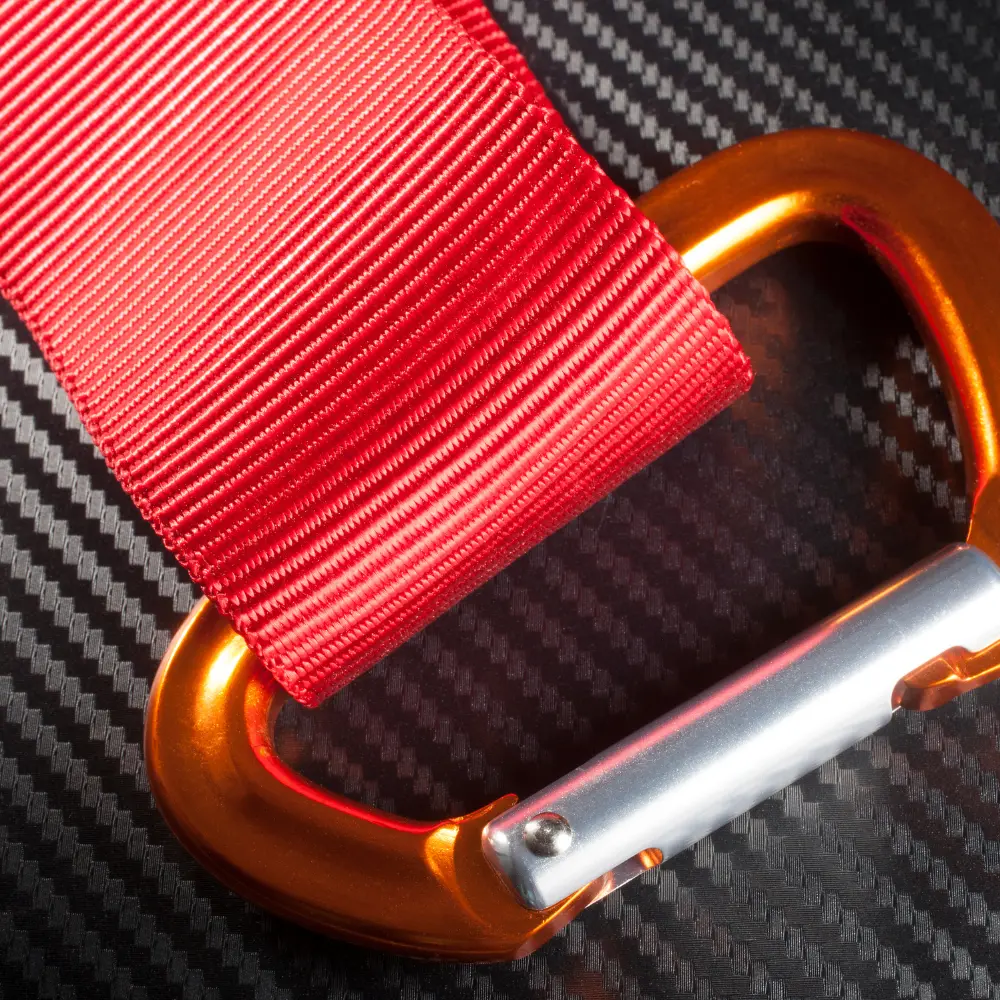
Most failures blamed on "bad webbing" are really failures of assumption. Someone assumed strength was singular, that a strap rated for thousands of pounds would behave the same way everywhere it was used. Then it slipped, stretched, cut in, or wore out faster than expected. The problem was never that the webbing was weak. The problem was that the wrong kind of strength was selected for the job.
Webbing is used across climbing systems, military gear, lifting equipment, restraint systems, and everyday products because strength varies with geometry, fiber, and construction. Flat structure spreads load. Certain materials manage shock. Others resist creep, abrasion, or repeated cycling. The common uses for webbing exist because those different expressions of strength solve different mechanical problems more reliably than rope, chain, or cable.
In climbing, mountaineering, and technical outdoor systems, webbing is used because it resists movement under load. Rope is strong, but its round geometry allows it to roll, creep, and self-align. In many anchor configurations, that behavior is undesirable.
Webbing's flat profile increases surface contact with rock, ice, or hardware. When looped around an outcropping or threaded through an anchor, it is less likely to rotate or walk under cyclic loading. This stability matters when loads change direction repeatedly, such as during belaying or rappelling. The strength of webbing here is not just tensile, but positional.
Tubular nylon webbing is commonly used in slings and runners because its construction allows fibers to share load more evenly when knotted or bent. This reduces stress concentration at bends and improves retained strength compared to flat tape under similar configurations. Slight elongation under load also helps manage dynamic forces, reducing peak shock during falls or sudden weighting.
In this environment, webbing solves the problem of maintaining anchor integrity in irregular, abrasive, and unpredictable terrain.
Military load-bearing equipment uses webbing because it provides repeatable strength at standardized intervals. The strength requirement is not confined to a single strap but is distributed across a system that must be reconfigured without compromising load capacity.
Modular systems rely on webbing to create attachment grids that can carry weight in multiple directions without redesign. The woven structure resists tearing at stitch points, allowing pouches and accessories to be mounted, removed, and repositioned repeatedly. The strength of webbing here lies in its ability to withstand localized stitching and punctures without propagating failure.
Environmental resistance is equally important. Nylon webbing retains strength under abrasion, flexing, and repeated wet-dry cycles better than many alternatives. While polyester offers superior UV resistance, nylon is often selected for its toughness and fatigue resistance, accepting known tradeoffs because failure modes are gradual and visible.
In this context, webbing solves the problem of distributed load carriage across adaptable systems that are subject to sustained abuse.
In industrial lifting, webbing is used because it combines high tensile capacity with load conformity. Chains and wire rope concentrate force at contact points. Webbing distributes force across the load's surface, reducing damage and minimizing slippage.
Synthetic web slings deform slightly under load, allowing them to seat themselves securely around irregular shapes. This controlled deformation reduces peak stress on both the load and the lifting hardware. The strength of webbing here lies not in absolute rigidity but in controlled compliance.
Another critical factor is inspection. Damage to webbing manifests as fraying, cuts, glazing, or discoloration. These indicators are visible without specialized equipment. This allows removal from service before catastrophic failure, which is not always the case with metal lifting devices. Webbing solves the problem of lifting heavy loads safely while preserving surfaces and providing clear indicators of degradation.
Seat belts, cargo straps, and restraint systems rely on webbing because it can absorb energy without losing structural integrity. In these applications, strength alone is insufficient. The material must elongate within a controlled range.
Polyester webbing is commonly used in vehicle restraints because it stretches less than nylon while maintaining excellent long-term stability. During a crash, this controlled elongation reduces peak forces transmitted to occupants while preventing excessive movement. The flat geometry ensures load is spread across the body rather than concentrated at narrow contact points.
Cargo control systems use webbing for similar reasons. During braking or impact, loads experience rapid force spikes. Webbing dampens these spikes, reducing hardware failure and load shift. The strength of webbing here lies in energy management rather than static capacity.
In transportation, webbing solves the problem of restraining mass under sudden, high-energy events without transferring destructive force.
In consumer and professional equipment, webbing is used where repeated loading would degrade other materials. Belts, bag straps, pet leashes, and furniture supports experience thousands of load cycles over their lifespan.
Webbing tolerates flexing, abrasion, and minor misalignment without permanent deformation. Its woven structure allows individual fibers to fail locally without immediate system failure. This redundancy is a form of strength that is rarely quantified but heavily relied upon.
In furniture suspension systems, elastic webbing is used because it evenly distributes body weight while returning to its original shape over time. In leashes and harnesses, nylon webbing is used because it withstands sudden pulls without snapping, reducing the risk of injury to both the handler and the animal.
In these applications, webbing addresses long-term durability under repetitive, low-to-moderate loads.
Webbing is not chosen because it is universally strong. It is chosen because it is strong in specific, useful ways:
These characteristics explain why webbing appears across such a wide range of applications without being interchangeable between them.
Common uses for webbing emerge from how its strength behaves, not from habit or tradition. Webbing is used where loads must be stabilized rather than merely supported, where force must be spread rather than concentrated, and where failure must be visible rather than sudden.
Understanding webbing as a structural textile clarifies why it remains specified for safety-critical systems, industrial environments, and everyday products. Its role is not to replace rope, chain, or cable universally, but to solve problems that those materials cannot solve as reliably.
That is why webbing is used where it is.
